
Context and call
At the start, we had no answers to basic questions: what people use, where they get lost, where they click, and whether they click at all. Every debate about features ended in nothing: 'I think,' 'but I feel.' My goal was to implement analytics in such a way that it did not complicate processes, but became a part of the product culture.
How I approached the task
First, I created a map of user scenarios across all three products — from the first entry point to the target action. This allowed me to build the framework of the future event structure and understand which points are genuinely important to us. Then, I conducted short interviews with product managers and analysts to ensure that the metrics would be useful not just to me.
What did I do
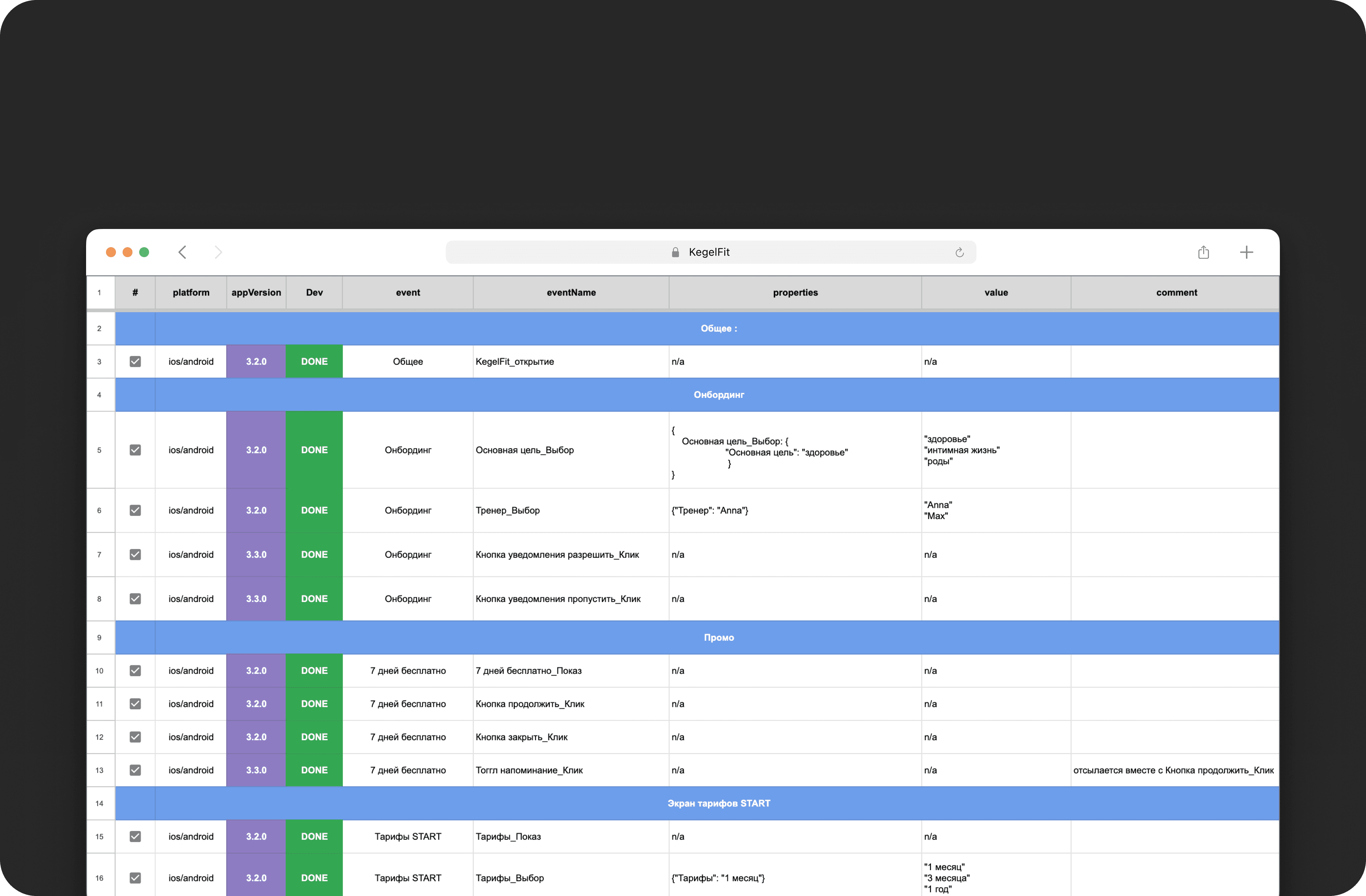
For the KegelFit mobile application, I configured AppMetrica as the optimal tool for iOS/Android. Inside KSS and MMS, where there were high security requirements and complex web interfaces, I used ClickStream. I developed an event model covering 87% of key scenarios and presented it as a clear specification for developers. I then conducted a tracking review, helped with the implementation, and verified the correctness of data collection.
Results
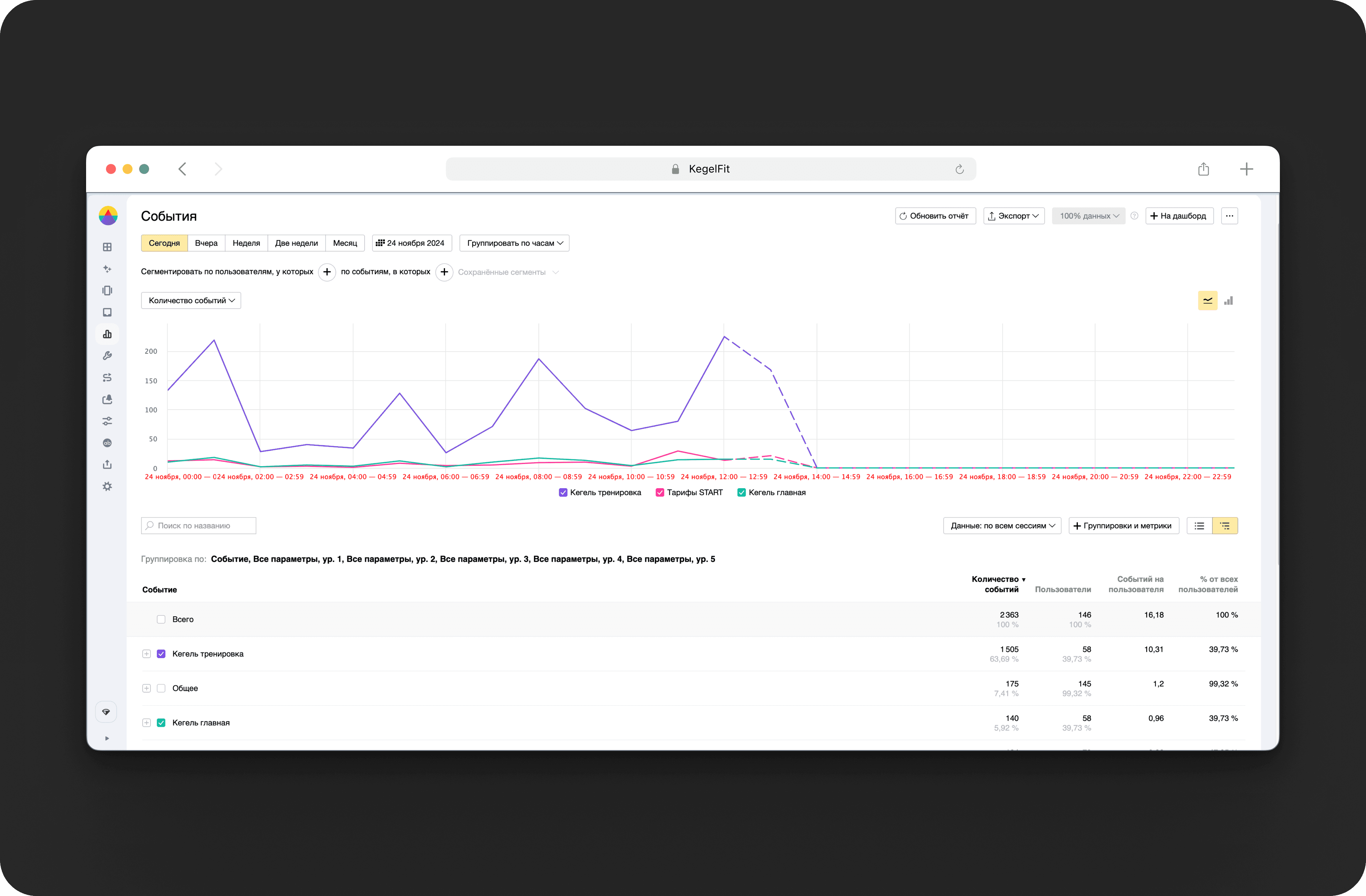
The teams stopped arguing "by guesswork" — everyone got common metrics
We started to see real bottlenecks in scenarios and improve them specifically
Each new release began to be launched together with events and hypotheses
What I understood in the process
Good analytics is not about beautiful dashboards, but about understanding behavior. You shouldn't track everything: only what helps make decisions. It's important for the team to trust this data — and that means involving them in the process from the very beginning.
Now, food solutions in these projects are made based on real data. This is already a solid foundation for the growth of products.
The tools and methods that I used
Figma, Miro, AppMetrica, ClickStream, CJM, Event Mapping, Pathway, UX Interviews, event design specification