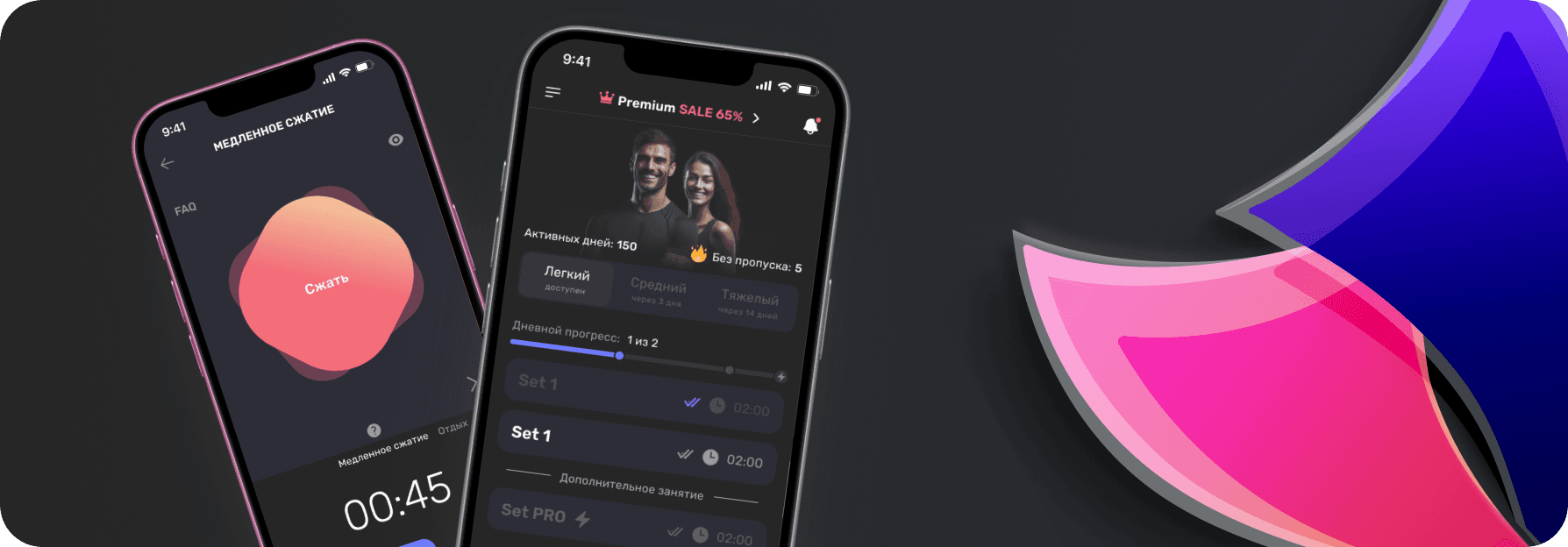
What did I start with?
When I came to the project, there was nothing — no structure, no visuals, no user journey. Only the idea: to create a simple, understandable application that helps people regularly exercise and track their progress. I designed the first version of the product: built the architecture, thought through the scenarios, created the design, and brought it to MVP, which made it to the stores and started gaining an audience.
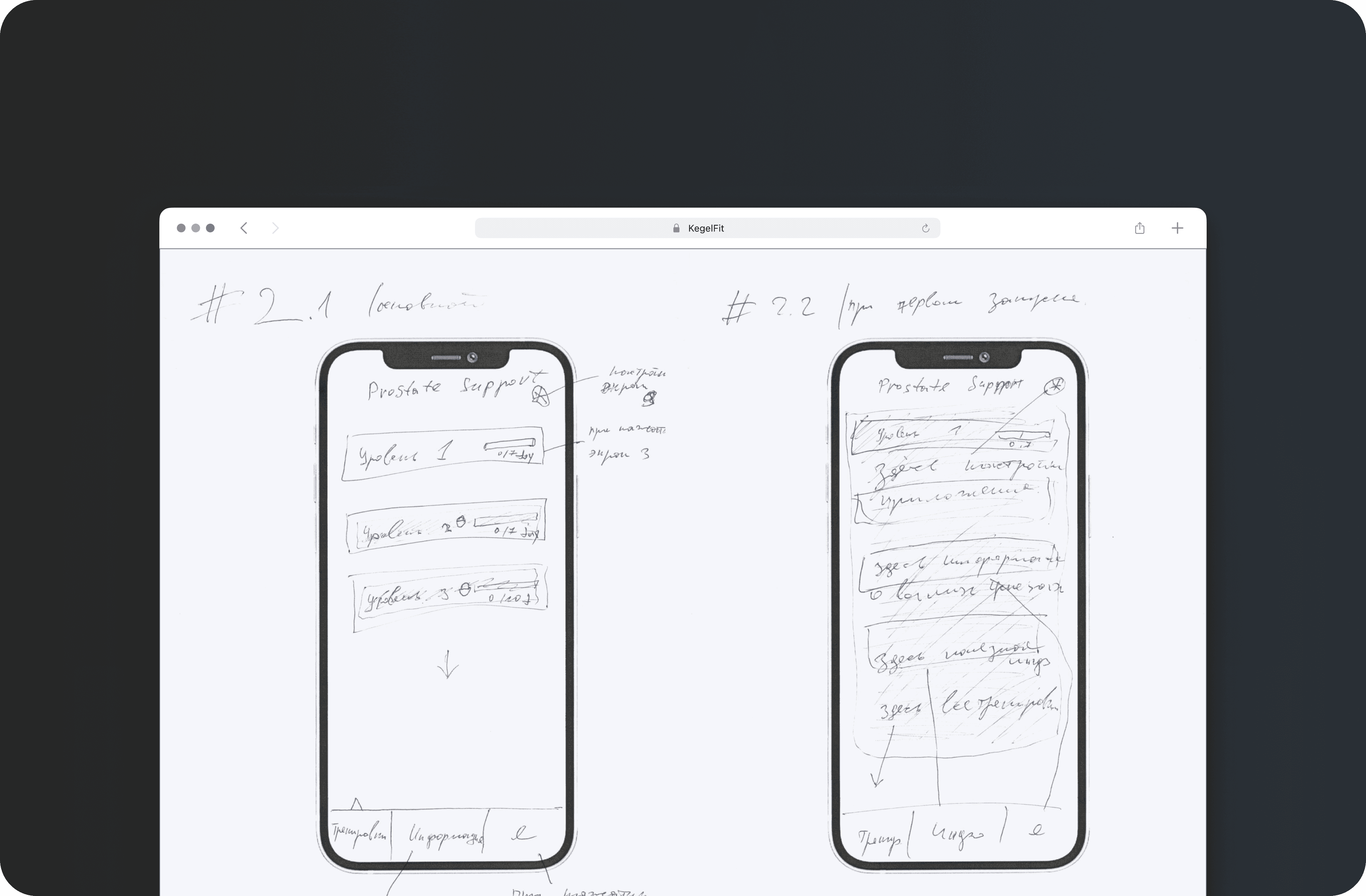
What went wrong (and what it led to)
Over time it became clear: the first version, although functional, was not inspiring. The interface was outdated, the logic was lost, and the user experience was not as smooth. People were not returning as often as desired. I decided that the product needed a redesign — and took it upon myself to rework it completely.
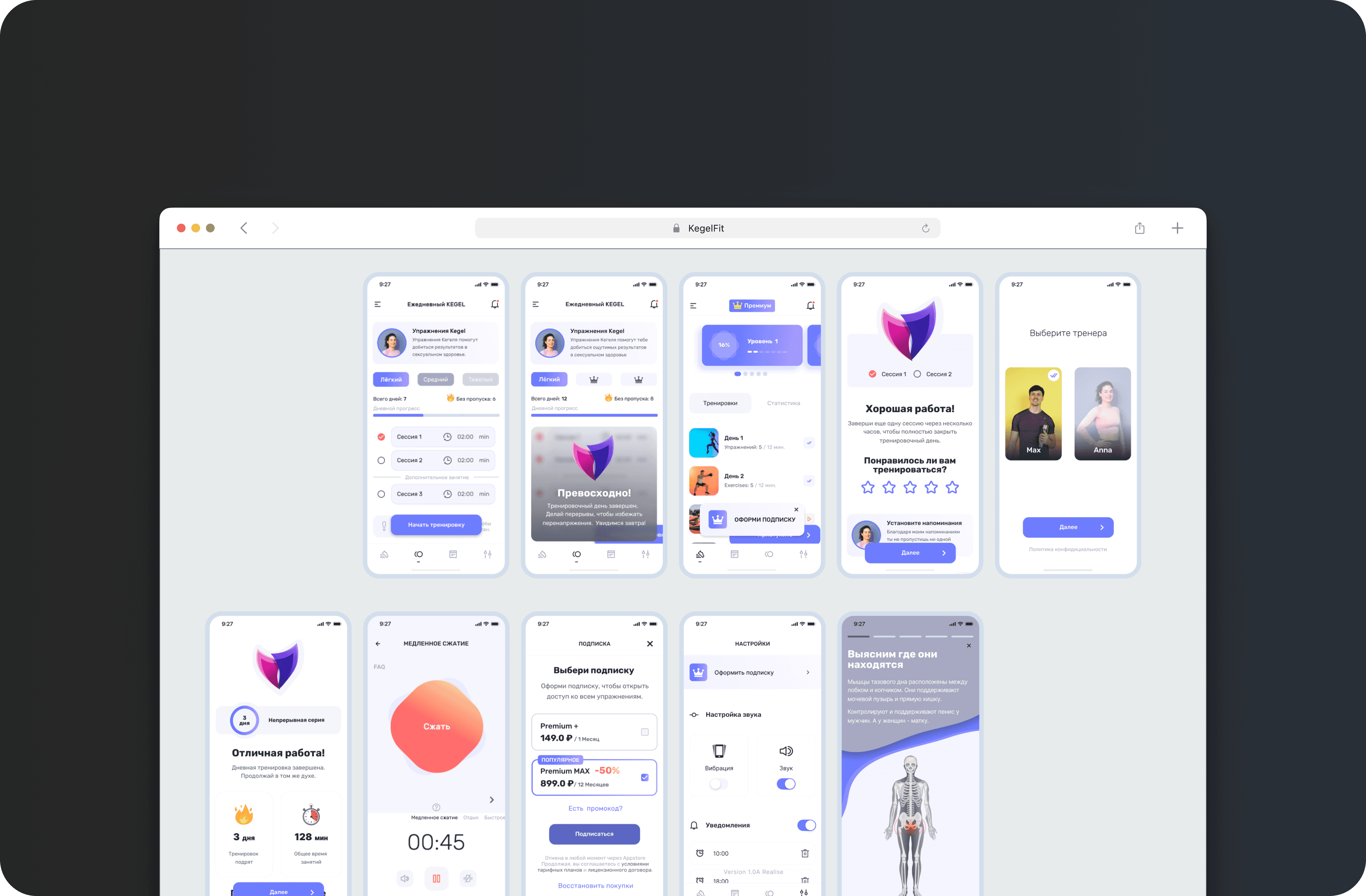
How I approached the second iteration
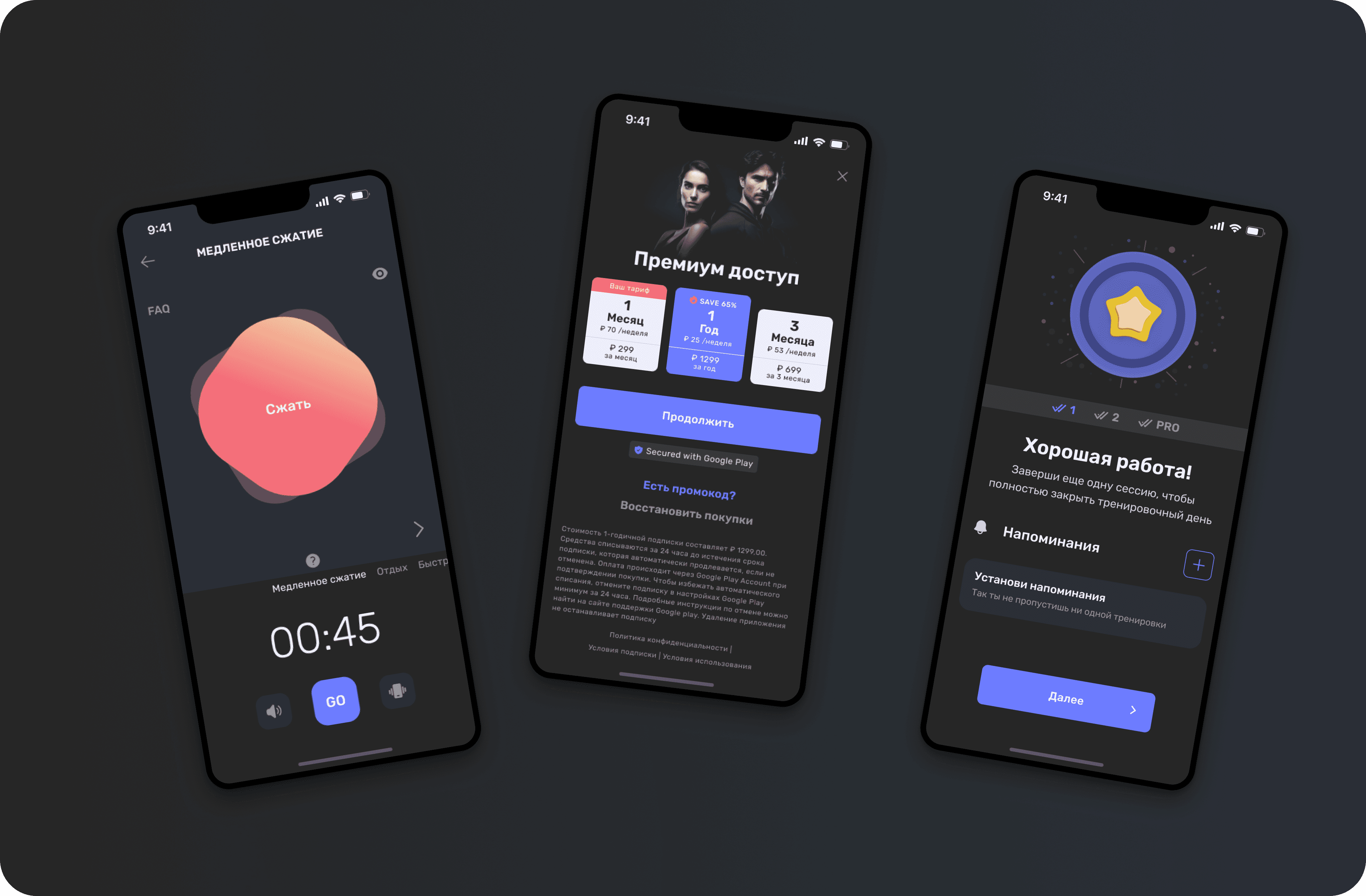
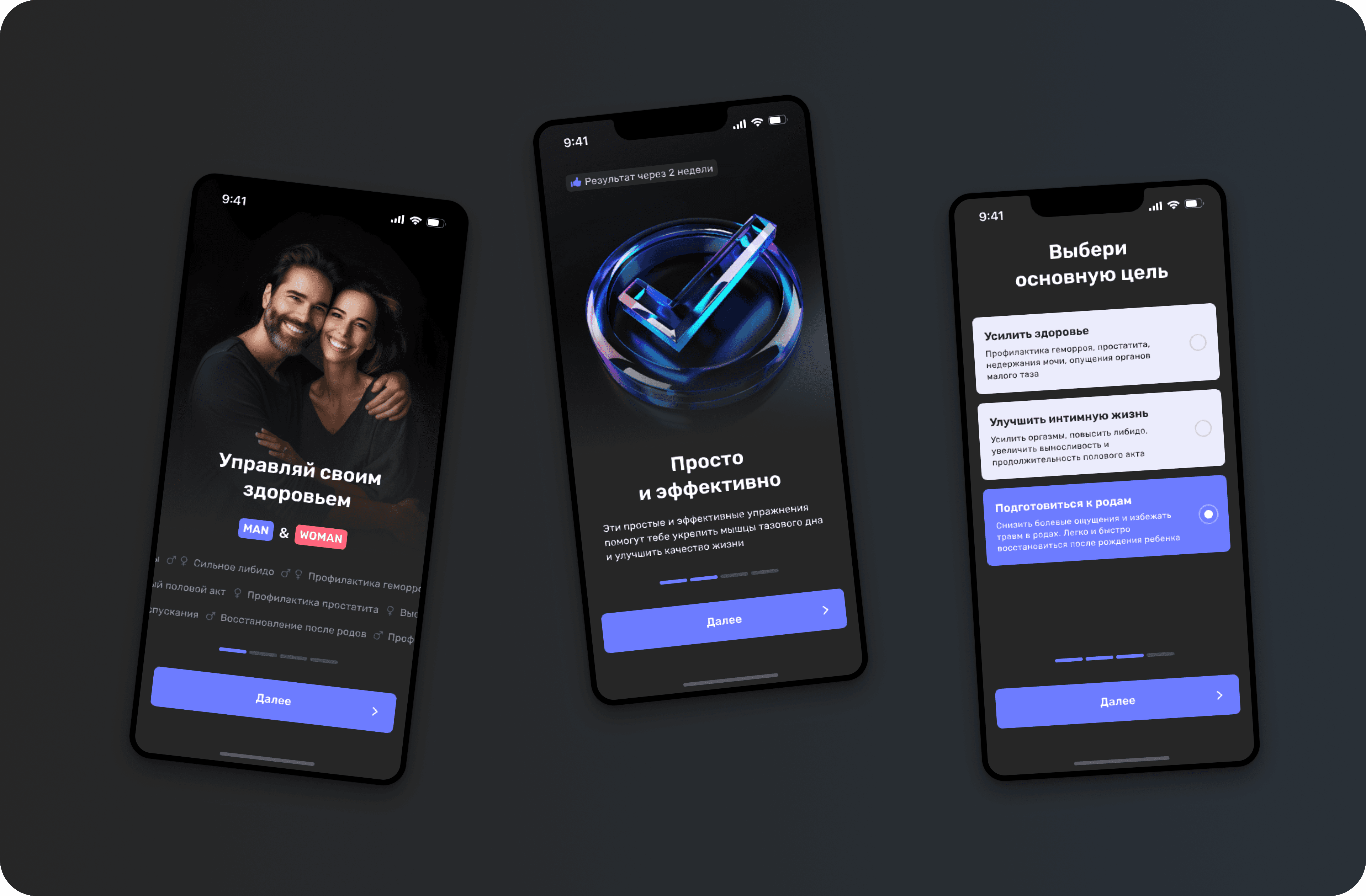
I analyzed user behavior, conducted interviews, and reviewed the analytics. It became clear: people expect simplicity, clarity, and a sense of support. Therefore, I simplified navigation, updated the visual style, added personalization, motivational elements, progress visualization, and a sense of rhythm.
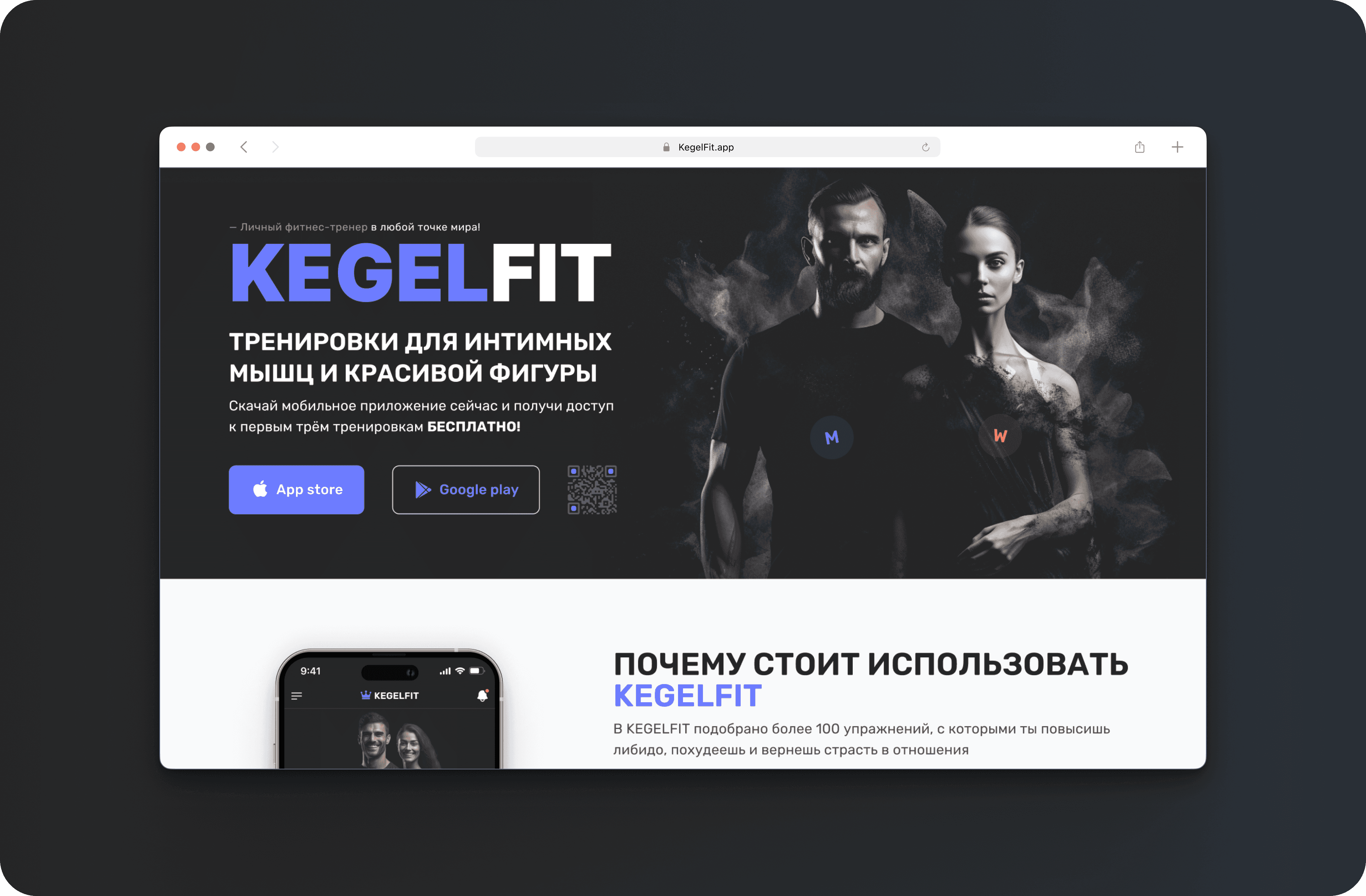
The interface has become brighter, more concise, and friendlier. Every detail worked to make the person want to open the app again.
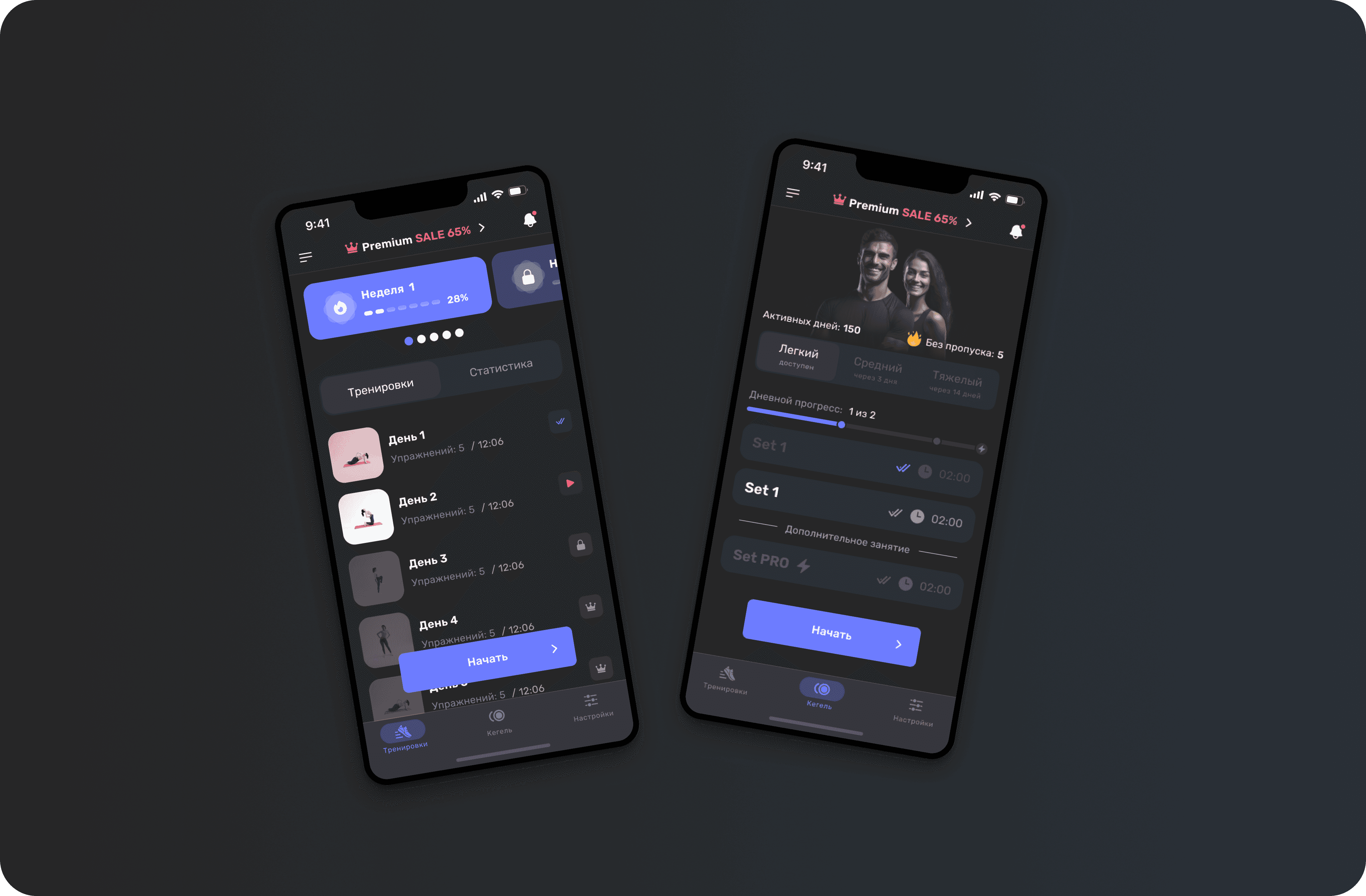
What happened
Engagement increased by 36%
Time to complete key actions was reduced by 22%
Satisfaction from surveys increased by 23%
The app made it to the App Free TOP in the health category
What I understood
Creating from scratch is a challenge. But reassembling your own product is harder. You've already invested a lot, and you have an emotional attachment. Still, it was in reassembly that I saw the strength: to improve without defending the old, but relying on facts and user behavior.
KegelFit has become a true design practice for me: from scratch to a relaunch. It's a project where I was both the architect and the builder, as well as the renovator. That's why it is especially dear to me.
Tools and approaches
Figma, Miro, Pathway, interview, App Store Connect, Google Play Console, visual style, prototyping, usability testing